
 EN
EN
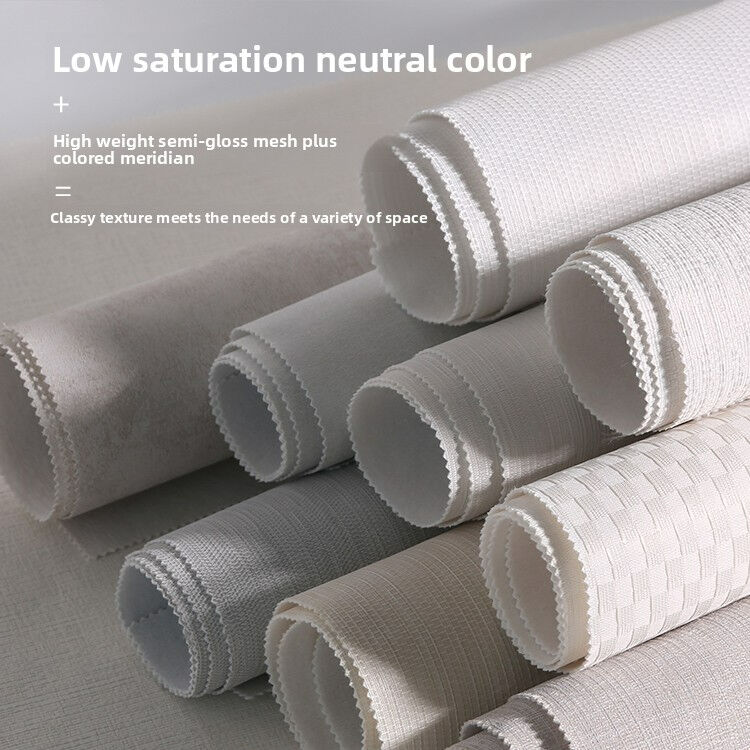
Modern interior design and construction industries face increasing pressure to minimize material waste while maintaining aesthetic excellence and installation efficiency. High precision wall covering represents a significant advancement in addressing these challenges by leveraging sophisticated manufacturing techniques, digital pattern matching, and engineered dimensional accuracy. This technological evolution transforms how wall covering materials are produced, distributed, and installed, fundamentally reducing waste at every stage of the supply chain and application process.
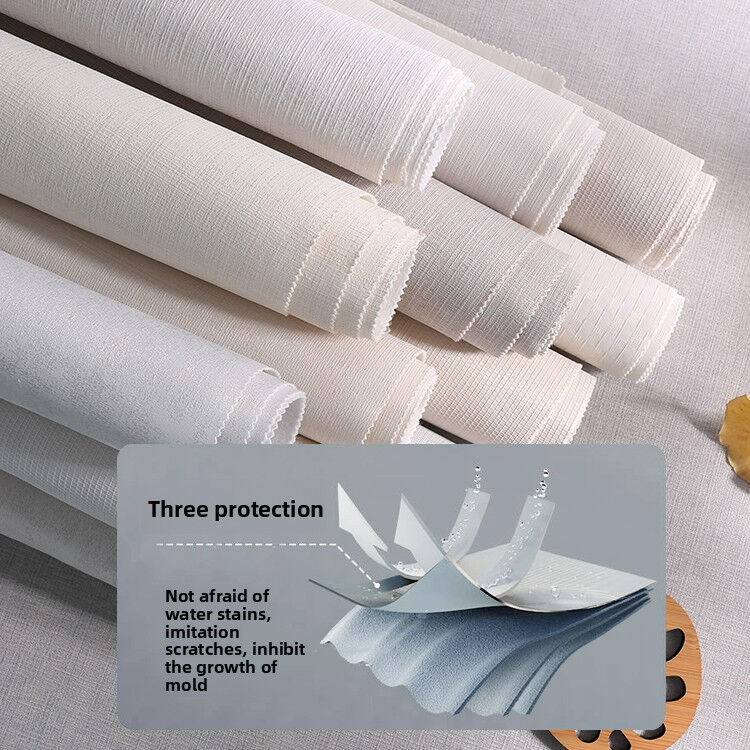
The waste reduction capabilities of high precision wall covering stem from multiple integrated factors including advanced pattern registration technology, superior dimensional stability, optimized roll widths, and enhanced installation predictability. Unlike conventional wall covering products that often require extensive trimming, pattern adjustment, and disposal of mismatched sections, precision-engineered materials enable installers to work with minimal excess while achieving seamless visual results. Understanding the specific mechanisms through which high precision wall covering reduces waste helps designers, contractors, and facility managers make informed decisions that balance aesthetic requirements with sustainability objectives and project cost management.
Manufacturing Precision and Material Optimization
Advanced Pattern Registration Technology
High precision wall covering utilizes computerized pattern registration systems during the manufacturing process that ensure every repeat aligns exactly to predetermined specifications with tolerances measured in fractions of millimeters. This exceptional accuracy eliminates the pattern drift that commonly occurs in standard wall covering production, where cumulative registration errors across long production runs create matching difficulties during installation. When patterns remain precisely consistent throughout entire production batches, installers can confidently cut and position materials without allocating excessive buffer lengths to compensate for potential misalignment, directly reducing the quantity of discarded material at job sites.
The pattern registration precision achieved in high precision wall covering production relies on servo-controlled printing and embossing equipment that continuously monitors and corrects positional accuracy throughout the manufacturing process. These systems employ optical sensors and feedback loops that detect even microscopic deviations from design specifications and make real-time adjustments to maintain perfect alignment. This technological sophistication ensures that pattern repeats positioned at opposite ends of a fifty-meter roll match as precisely as adjacent repeats, a consistency level that fundamentally changes installation planning and waste calculation methodologies.
Dimensional Stability Engineering
The substrate materials and coating formulations used in high precision wall covering are specifically engineered to resist dimensional changes caused by humidity fluctuations, temperature variations, and aging processes that typically affect wall covering products. This stability prevents the expansion and contraction that creates seam gaps or overlaps during and after installation, allowing installers to work with tighter tolerances and eliminate the protective oversizing that traditionally adds waste margins to every cut. When dimensional stability is guaranteed through material science rather than installation technique, the cumulative waste reduction across large commercial projects becomes substantial.
High precision wall covering manufacturers achieve dimensional stability through multiple technical approaches including cross-directional reinforcement layers, moisture-barrier backing treatments, and polymer formulations with low hygroscopic characteristics. These engineering decisions ensure that a precisely cut strip maintains its dimensions from the moment it leaves the cutting table until final adhesive curing completes, eliminating the compensatory cutting practices that installers employ when working with materials prone to dimensional variation. The confidence this stability provides allows reduction of typical waste allowances from fifteen percent to as little as five percent on properly planned installations.
Optimized Roll Width Configuration
Strategic selection of roll widths in high precision wall covering production enables manufacturers to offer dimensions that align with standard architectural modules and common room heights, reducing the amount of material trimmed from each strip during installation. While conventional wall covering typically comes in fixed widths that may not correspond efficiently to actual application dimensions, precision products often provide width options that maximize coverage while minimizing horizontal seams and vertical waste. This dimensional optimization represents a fundamental waste reduction strategy that begins at the product design stage rather than relying solely on installation technique.
The waste reduction impact of optimized roll widths becomes particularly significant in commercial applications where high precision wall covering installations cover extensive square footage with repetitive dimensional patterns. When roll widths align closely with ceiling heights or modular wall sections, installers eliminate the substantial trim waste generated when standard products must be cut down to fit specific architectural dimensions. This strategic dimensional planning, combined with the pattern precision discussed earlier, creates synergistic waste reduction effects that compound across large-scale projects.
Installation Efficiency and Cutting Accuracy
Predictable Pattern Matching
The exceptional pattern consistency inherent in high precision wall covering enables installers to calculate exact material requirements with confidence, eliminating the substantial safety margins traditionally added to account for pattern matching uncertainties. When every roll in a production batch maintains identical pattern registration, installers can use standardized cutting lists rather than adaptive approaches that generate excess material as insurance against matching problems. This predictability transforms material planning from an art based on experience and risk management into a science based on geometric calculation, fundamentally reducing the buffer material that typically becomes waste.
Installation teams working with high precision wall covering report significant reductions in the frequency of pattern matching errors that require discarding partially installed strips or cutting replacement sections from reserve material. The reliability of pattern alignment allows installers to work more quickly while simultaneously reducing waste, creating efficiency gains that benefit both project economics and environmental impact. This dual benefit distinguishes high precision wall covering from cost-reduction approaches that sacrifice quality or sustainability to achieve savings, instead delivering improvements across multiple performance dimensions simultaneously.
Reduced Seam Overlap Requirements
Traditional wall covering installation techniques often require overlapping adjacent strips by several millimeters before cutting through both layers to create perfectly matched seams, a process that generates strips of waste material along every vertical joint. High precision wall covering with guaranteed edge straightness and dimensional accuracy enables butt-seam installation methods that eliminate this overlap cutting waste entirely. When edges are manufactured to tolerances that ensure perfect straightness and strips maintain their dimensions during handling and installation, installers can position adjacent pieces edge-to-edge without overlap, removing this significant waste stream from the installation process.
The waste reduction achieved through butt-seam capability extends beyond the material savings from eliminated overlap strips to include labor efficiency gains that reduce overall project resource consumption. Installers working with high precision wall covering spend less time on seam preparation and cutting operations, allowing them to complete projects more quickly while generating less waste material requiring disposal. This efficiency improvement contributes to waste reduction not only through direct material savings but also through decreased consumption of transportation fuel, disposal services, and other resources associated with waste management logistics.
Minimized Correction and Replacement
Installation errors that require removing and replacing wall covering sections represent a major source of waste in conventional projects, as both the incorrectly installed material and its replacement contribute to total material consumption. High precision wall covering reduces this waste category by providing installation characteristics that minimize error probability, including clearly defined pattern orientations, consistent adhesive compatibility, and dimensional predictability that simplifies positioning decisions. When installers can work confidently without extensive trial fitting or cautious positioning adjustments, the likelihood of installation errors requiring material replacement decreases substantially.
The error reduction enabled by high precision wall covering proves particularly valuable in complex installation environments featuring irregular wall geometries, multiple architectural elements, or challenging access conditions. In these situations where conventional materials often require multiple attempts to achieve acceptable results, precision products allow installers to succeed on first attempts more consistently, eliminating the waste multiplication that occurs when difficult installations require repeated material usage. This reliability advantage represents a waste reduction mechanism that becomes more significant as installation complexity increases.
Design Flexibility and Custom Production
Digital Manufacturing Integration
High precision wall covering production increasingly incorporates digital manufacturing technologies that enable custom pattern creation and modification without the substantial setup waste associated with traditional analog production methods. Digital printing and pattern generation systems can switch between designs with minimal material waste during changeovers, unlike conventional production approaches that generate significant waste quantities while equipment is adjusted and calibrated for new patterns. This flexibility allows manufacturers to produce precisely the quantities required for specific projects rather than overproducing to justify setup costs, reducing waste at the production stage before materials ever reach installation sites.
The integration of digital design systems with high precision wall covering manufacturing creates opportunities for waste reduction through optimized pattern scaling and layout planning that considers actual project dimensions. Designers can adjust pattern sizes and repeat configurations to align precisely with specific room dimensions, minimizing trim waste during installation while maintaining design integrity. This customization capability transforms high precision wall covering from a commodity product selected from fixed options into a tailored solution engineered specifically for waste minimization within particular architectural contexts.
Project-Specific Quantity Optimization
Manufacturers of high precision wall covering can leverage production precision to offer project-specific material packages calculated to provide exactly the quantity required for particular installations with minimal excess. This approach contrasts with conventional distribution models where materials are sold in standard roll quantities that rarely align precisely with actual project requirements, inevitably creating either material shortages requiring additional orders or surplus quantities that become waste. When production precision enables confident calculation of exact requirements and manufacturing flexibility allows production of specific quantities, the systemic waste inherent in standardized packaging can be substantially reduced.
The economic feasibility of project-specific quantity optimization depends on the production efficiency that high precision wall covering manufacturing achieves through advanced equipment and process control. As setup times decrease and production flexibility increases through technological advancement, the cost premium for custom quantities diminishes, making waste-optimized ordering practical for increasingly smaller projects. This trend toward mass customization enabled by precision manufacturing represents a fundamental shift in how building materials are specified and distributed, with significant implications for industry-wide waste reduction.
Coordinated Multi-Surface Applications
High precision wall covering systems designed for whole-house or multi-room applications can coordinate patterns and dimensions across different surfaces to maximize material utilization efficiency throughout entire projects. When ceiling treatments, wall applications, and accent installations are engineered as integrated systems rather than independent selections, manufacturers can optimize pattern layouts and material dimensions to minimize waste across all surfaces collectively. This systems approach to waste reduction achieves efficiencies impossible when individual surface treatments are considered in isolation, particularly in projects featuring extensive square footage across multiple rooms or areas.
The coordination capabilities inherent in high precision wall covering systems extend beyond pattern matching to include compatible installation methods, adhesive systems, and trimming approaches that streamline multi-surface applications. When all system components are engineered for mutual compatibility and precision alignment, installers can work more efficiently across different surface types without the technique adjustments and material handling variations that often generate waste. This installation consistency reduces both direct material waste and indirect waste associated with excessive labor time, transportation between supply points, and other resource consumption patterns that increase when working with incompatible materials.
Long-Term Performance and Lifecycle Waste
Enhanced Durability and Lifespan
The superior materials and manufacturing quality that characterize high precision wall covering typically result in extended service life compared to conventional products, reducing the lifecycle waste associated with premature replacement. When wall covering maintains its appearance and structural integrity for substantially longer periods, the frequency of renovation cycles decreases proportionally, reducing the cumulative material consumption and waste generation associated with repeated installations over building lifespans. This lifecycle perspective on waste reduction recognizes that initial installation waste represents only one component of total environmental impact, with replacement frequency potentially creating larger cumulative waste streams.
High precision wall covering achieves enhanced durability through multiple technical factors including superior abrasion resistance, colorfast pigment systems, reinforced substrate construction, and protective surface treatments that resist staining and damage. These durability characteristics prove particularly valuable in commercial environments where wall surfaces endure substantial wear from daily activities, environmental exposure, and cleaning operations. By extending replacement cycles from typical five-to-seven-year intervals to ten years or longer, precision products reduce lifecycle waste substantially while also decreasing the disruption and resource consumption associated with renovation projects.
Simplified Maintenance and Cleaning
The smooth, precisely manufactured surfaces typical of high precision wall covering facilitate effective cleaning with less aggressive methods and chemical products than required for conventional materials with irregular textures or inconsistent surface treatments. This cleanability reduces the likelihood of permanent staining or damage that forces premature replacement, extending functional lifespan and reducing waste. When wall covering can be maintained in acceptable condition through routine cleaning rather than requiring replacement due to accumulated soiling or damage, the waste reduction benefits compound over extended service periods.
High precision wall covering manufacturers often incorporate soil-resistant and antimicrobial surface treatments that enhance cleanability while maintaining the precise aesthetic characteristics that define these premium products. These functional coatings integrate seamlessly with underlying decorative layers without compromising pattern clarity or surface texture, demonstrating how technical performance attributes can be engineered into products without aesthetic compromise. The maintenance advantages these treatments provide contribute to waste reduction both directly through extended replacement cycles and indirectly through reduced consumption of cleaning products and associated resources.
Renovation and Removal Efficiency
When high precision wall covering eventually requires replacement at the end of its service life, the consistent substrate construction and adhesive compatibility typical of precision products often enable cleaner removal with less wall surface damage than conventional materials create. This removal efficiency reduces the repair and preparation work required before installing replacement materials, decreasing waste associated with surface patching compounds, primer applications, and other preparatory materials. The cumulative waste impact of renovation efficiency becomes substantial across multiple lifecycle iterations, particularly in commercial properties experiencing regular renovation cycles.
Some high precision wall covering systems are specifically engineered for removal and replacement efficiency, incorporating substrate layers and adhesive formulations designed to release cleanly from wall surfaces without tearing or leaving residue. These design considerations reflect growing awareness that product lifecycle environmental impact extends beyond initial installation to include end-of-life characteristics that affect renovation resource consumption. As sustainable design practices increasingly emphasize lifecycle thinking, the renovation efficiency advantages of high precision wall covering provide competitive differentiation while supporting broader waste reduction objectives.
FAQ
What percentage of waste reduction can be expected with high precision wall covering compared to standard products?
Waste reduction from high precision wall covering typically ranges from forty to sixty percent compared to conventional products in well-planned installations, with actual results varying based on project complexity, room geometry, and installer experience. Simple rectangular rooms with standard dimensions may achieve waste reductions approaching seventy percent, while complex spaces with numerous architectural features, irregular dimensions, or challenging access conditions typically realize waste reductions in the thirty to fifty percent range. The pattern precision, dimensional stability, and installation predictability inherent in quality precision products enable these substantial improvements over conventional materials that require larger safety margins and generate more cutting waste during pattern matching operations.
Does high precision wall covering require specialized installation tools or techniques that affect waste reduction?
High precision wall covering generally installs using standard professional techniques and tools, though the precision characteristics of these products reward careful measurement and cutting practices that maximize waste reduction potential. Installers familiar with precision materials often adopt refined measurement protocols and cutting sequences that leverage the predictable pattern matching and dimensional stability these products provide, achieving waste reduction results that exceed those possible with casual installation approaches. While specialized tools are not required, digital measuring devices, precision cutting guides, and careful material handling practices help installers fully realize the waste reduction capabilities inherent in precision products.
How does pattern repeat size in high precision wall covering affect waste generation?
Pattern repeat size influences waste generation primarily through its relationship to vertical wall dimensions, with smaller repeats typically producing less waste when ceiling heights do not align precisely with repeat multiples. High precision wall covering with small repeat dimensions allows installers to minimize the excess length required at top and bottom trim points, reducing cumulative waste across multiple strips. However, the precision manufacturing quality that ensures perfect pattern registration across all repeat sizes means that even large-repeat precision products generate substantially less waste than conventional materials with equivalent repeat dimensions, as the matching reliability eliminates safety margins traditionally added to accommodate pattern drift uncertainty.
Can high precision wall covering waste reduction benefits justify premium pricing compared to standard products?
The waste reduction achieved with high precision wall covering frequently justifies price premiums through combined savings in material costs, disposal fees, installation labor, and lifecycle replacement expenses, particularly in commercial projects where large square footage amplifies per-unit savings. A comprehensive cost analysis should include not only initial material price differences but also reduced waste disposal costs, decreased installation time resulting from fewer pattern matching complications, lower likelihood of costly installation errors requiring material replacement, and extended service life reducing lifecycle replacement frequency. Many commercial and institutional projects find that total cost of ownership over expected service life favors precision products despite higher initial purchase prices, especially when waste disposal costs and sustainability objectives are factored into decision criteria.
Table of Contents
- Manufacturing Precision and Material Optimization
- Installation Efficiency and Cutting Accuracy
- Design Flexibility and Custom Production
- Long-Term Performance and Lifecycle Waste
-
FAQ
- What percentage of waste reduction can be expected with high precision wall covering compared to standard products?
- Does high precision wall covering require specialized installation tools or techniques that affect waste reduction?
- How does pattern repeat size in high precision wall covering affect waste generation?
- Can high precision wall covering waste reduction benefits justify premium pricing compared to standard products?