Installing wall fabric requires careful planning and systematic preparation to achieve professional results that last. Many property managers and designers underestimate the importance of groundwork, but the reality is that preparation accounts for a significant portion of installation success. When you take time to properly assess your space, prepare surfaces, and plan your approach, you eliminate costly mistakes and ensure your decorative wall fabric performs as intended. This guide walks you through the essential preparation steps that transform a wall fabric project from risky to reliable.
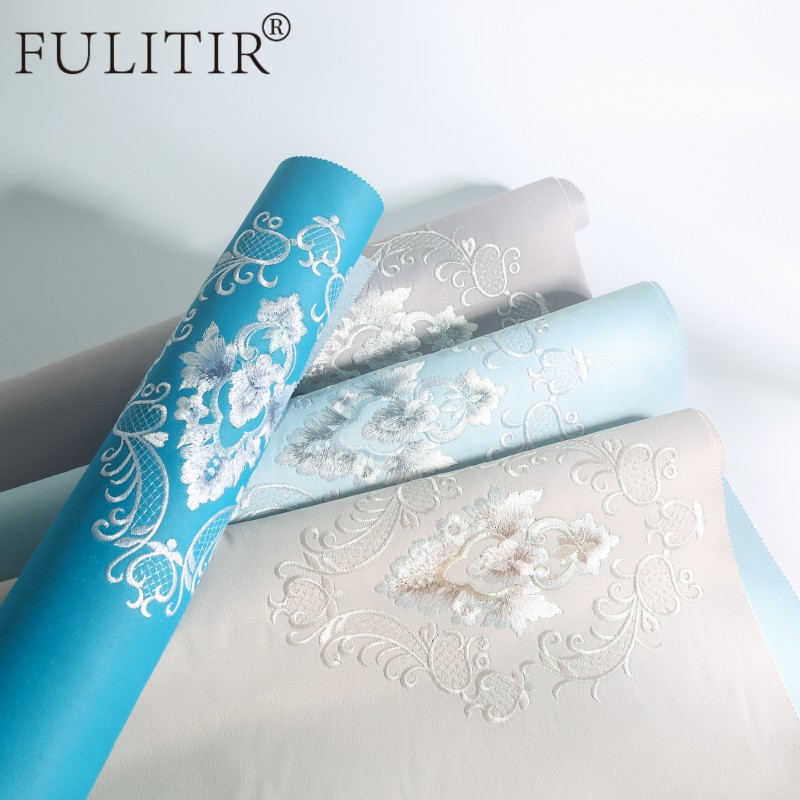
Understanding what a fabric wall covering demands from its environment helps you make informed decisions before installation begins. Acoustic wall fabric has distinct moisture and temperature sensitivities, while decorative wall fabric may prioritize aesthetic consistency and durability. Your preparation strategy must align with the specific product you've selected and the conditions it will face throughout its lifespan in your space.
Accurate measurements form the foundation of every wall fabric project. You need precise wall heights, widths, and corner angles to order the correct amount of material and avoid waste or shortages. Use a laser measurer or steel tape to record dimensions from multiple points on each wall, then document any architectural features such as windows, doors, electrical outlets, or decorative elements. This documentation helps you plan seams strategically and ensures your fabric wall covering arrives in quantities that match your actual installation area.
Moisture and temperature fluctuations directly affect how wall fabric performs over time. Bathrooms, kitchens, and basements present moisture challenges that demand moisture-resistant acoustic wall fabric or sealed decorative wall fabric options. Test ambient humidity levels and identify any existing moisture issues before you commit to your wall fabric selection. In spaces with significant temperature swings, allow the material to acclimate to your environment for at least 24 hours before installation. This acclimation prevents shrinkage, expansion, or adhesive failure after the fabric wall covering is already in place.
Clean walls accept decorative wall fabric and acoustic wall fabric more reliably than dusty, paint-chipped, or residue-covered surfaces. Remove all existing wallpaper, peeling paint, and surface contaminants using appropriate stripping agents or sanding techniques. Wash walls with a mild detergent solution and allow them to dry completely before assessment. Your wall fabric installation depends on good adhesion, which fails when dirt, grease, or old finish remnants prevent full contact between the wall and the adhesive backing of your fabric wall covering.
Large holes, cracks, and uneven surfaces compromise the appearance and longevity of wall fabric installations. Fill holes and gaps with appropriate joint compound or spackle, then sand smooth once dry. For significant irregularities, consider using a specialized primer or skim-coating compound to create a uniform base. Acoustic wall fabric can mask minor imperfections, but decorative wall fabric highlights surface inconsistencies, making prior repair work essential for visual success. Test the wall surface with a straightedge to identify high spots and low spots, then plan your correction strategy accordingly.
Not all adhesives work equally well with every type of fabric wall covering. Some acoustic wall fabric requires specialized moisture-resistant adhesives, while decorative wall fabric may demand precision application with specific tack properties. Consult product documentation to identify recommended adhesives and primers that match your wall material and environmental conditions. Premium primers improve adhesion and can extend the lifespan of your wall fabric significantly. Test adhesive compatibility on a small, inconspicuous area before full installation to avoid surprises that compromise your entire project.
Strategic seam planning minimizes visibility and enhances the appearance of decorative wall fabric, while acoustic wall fabric seams focus on functional coverage and sound absorption performance. Begin by identifying the most visible wall or focal point in your space, then work your seam layout outward from that location. Avoid placing seams directly behind frequently used pathways or near windows where shadows emphasize seam lines. Draw a scaled layout on paper before you begin, noting where rolls meet and how pattern alignment (if applicable) affects your sequence. This planning prevents mid-project confusion and ensures your fabric wall covering installation flows logically and looks intentional.
Wall fabric offers acoustic benefits, softer aesthetic qualities, and improved durability compared to paint, while providing superior dimensional texture than flat wallpaper. Decorative wall fabric creates a luxury finish that traditional materials cannot match. Acoustic wall fabric absorbs sound, improving room acoustics and reducing noise transmission. This functional and aesthetic combination makes wall fabric an investment that addresses both design and performance goals.
Most fabric wall covering materials should acclimate to your room's temperature and humidity for 24 to 48 hours before installation. This period allows the material to expand or contract to its stable state, preventing dimensional changes after adhesive application. Acoustic wall fabric and decorative wall fabric both benefit from this waiting period, particularly in climates with significant seasonal variation or in spaces with controlled environments like offices or retail areas.
Standard acoustic wall fabric is not suitable for bathrooms or other high-moisture environments because moisture degrades the material and adhesive over time. However, specially treated moisture-resistant acoustic wall fabric exists for these applications. Always verify moisture ratings and installation restrictions before selecting wall fabric for kitchens, bathrooms, or basements. Proper ventilation and moisture control measures further protect your wall fabric investment in challenging environments.

Hangzhou Meibi Decoration Material Co., Ltd. (FULITIR) delivers premium wallcoverings & soft decor solutions for luxury homes and chain hotels, trusted by Lavande, Vienna, Kyriad.
No.2001,Meilin Road,DangWan Town,XiaoShan district, HangZhou city,China
Copyright © 2026 Hangzhou Meibi Decoration Materials Co., Ltd. All rights reserved. Privacy Policy

 EN
EN

 Hot News